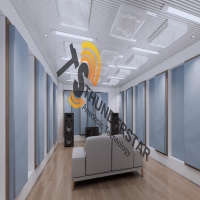






Comprehensive Application Solutions of Acoustic Testing Equipment in Building Acoustics, Spatial Design, Acoustic Research & Education
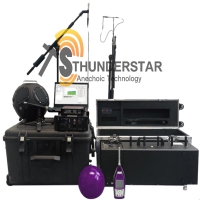
For modern building acoustic design, indoor sound environment optimization, academic research and professional talent training, acoustic testing equipment serves as the core tool for collecting acoustic data, verifying design schemes and conducting teaching experiments. The complete product portfolio includes acoustic measuring instruments, vibration measuring instruments, sound sources and data analysis software. These devices can be used with full anechoic chambers, semi-anechoic chambers, reverberation rooms and sound insulation chambers. Compliant with ISO, IEC and SS series acoustic standards issued by Singapore’s Building and Construction Authority (BCA) and Housing & Development Board (HDB), they are widely adopted by building acoustic design firms, spatial planning teams, university acoustic departments and acoustic research institutes, and have become fundamental facilities for acoustic laboratories across Southeast Asia.
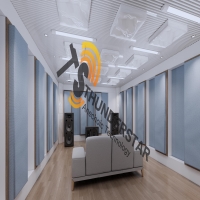
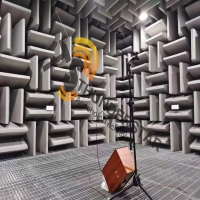
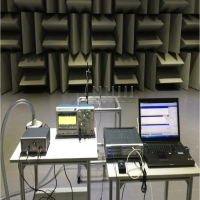
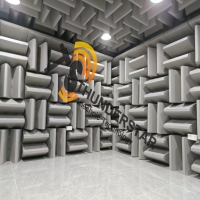
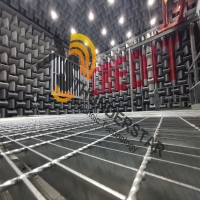
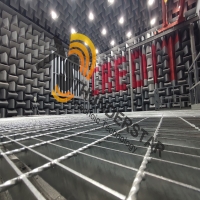
Building acousticians and spatial designers rely on professional acoustic testing equipment to conduct inspections during project implementation and scheme optimization. The equipment supports tests on airborne sound insulation and impact sound insulation of residential buildings, commercial complexes and office buildings, as well as reverberation time and speech intelligibility measurement for cinemas, auditoriums and meeting rooms. When constructing standardized acoustic laboratories, practitioners usually cooperate with acoustic solution providers to deliver integrated acoustic engineering projects, and select semi-anechoic chamber or full anechoic chamber layouts according to test categories. Professional semi-anechoic rooms and semi-anechoic booths designed based on proven automotive semi-anechoic chamber technology feature high load-bearing capacity, suitable for tests on large building components and complete indoor acoustic facilities. Full anechoic chambers and anechoic rooms are applied to routine instrument calibration and basic acoustic experiments. A large number of Guangdong-based semi-anechoic chamber projects have accumulated rich practical experience. Their supporting equipment combinations and laboratory layouts are widely referenced by building acoustic laboratories in Singapore, Malaysia, Thailand and other Southeast Asian countries. Meanwhile, all testing devices can be connected to building acoustic measurement systems to realize integrated data collection and analysis.
For universities, vocational colleges and acoustic research institutes, acoustic testing equipment serves two core purposes: scientific research and professional education. In research work, researchers use these devices to explore noise propagation rules, sound absorption material performance and sound field distribution, and carry out research on building noise reduction and spatial acoustic optimization. In teaching and training, acoustic instruments and supporting test spaces act as key practical training facilities, helping students understand acoustic principles and master testing skills, so as to cultivate professional talents for the industry. Abnormal noise detection systems and quiet rooms are also deployed in some teaching scenarios to enrich experimental contents and cover the whole process from theoretical learning to practical operation. In addition, acoustic training institutions across Southeast Asia keep introducing standardized acoustic testing equipment to meet the talent cultivation demands of the local construction industry.
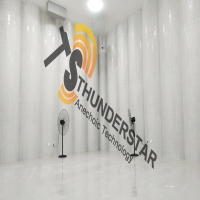
Different acoustic spaces match diverse test scenarios. Full anechoic chambers are mainly used for instrument calibration and pure sound field research; semi-anechoic chambers and hemi-anechoic chambers suit tests on large components and simulated actual working conditions; reverberation rooms and sound insulation chambers focus on building sound insulation and material sound absorption tests. Acoustic testing equipment is highly compatible with all types of acoustic facilities. There is no fixed optimal combination, and organizations and teams can make selections according to research directions, design projects and teaching syllabi. With the continuous construction of high-rise buildings and refined acoustic regulations in Singapore and Southeast Asia, as well as the steady development of acoustic research and education systems, the market demand for acoustic testing equipment and supporting acoustic engineering keeps growing.
ฝากคำตอบของคุณไว้
ที่อยู่อีเมลของคุณจะไม่ถูกเผยแพร่ฟิลด์ที่ต้องการจะถูกทำเครื่องหมาย *