





Impact Sound Insulation Chamber: Realworld structural noise testing for building floor assemblies
Floor-borne impact noise has long been a tricky challenge for residential construction projects across Southeast Asia. Footfall noise, furniture dragging vibration and running children generate structural-borne sound that travels through floor slabs, creating noise disturbance for residents on lower floors. Unlike airborne noise which can be controlled by doors and windows, impact noise originating from building structures cannot be easily solved by ordinary sound-absorbing materials. Numerous completed residential developments receive frequent occupant complaints regarding floor noise after handover, and post-construction rectification usually costs substantial time and capital. Therefore, material manufacturers, acoustic consultants, property developers and independent testing laboratories demand reliable test facilities to evaluate the actual performance of floor assemblies, and the impact sound insulation chamber is purpose-built for this application scenario.
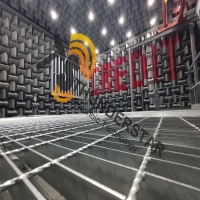
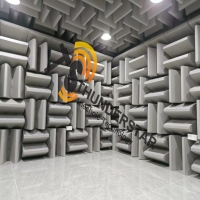
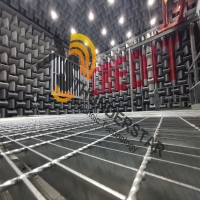
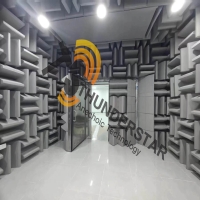
Previously, many industry practitioners conducted impact noise measurement directly on construction sites or inside ordinary laboratory spaces. Nevertheless, ambient background noise from traffic, mechanical equipment and human activities will interfere with measuring results. Without dedicated vibration-isolated structural design, flanking transmission via walls and building columns will occur, leading to large deviation among repeated tests. Data obtained under such conditions cannot support new-product development, building compliance submission or green building certification work. An impact sound insulation chamber consists of a source room and a receiving room with full vibration isolation setup to break structural sound bridges. The specimen opening, sealing details and internal acoustic environment are professionally configured, suppressing outside interference and reproducing realistic sound transmission conditions of real-world building floors, to guarantee repeatable test outcomes.
Manufacturers producing resilient underlays, floating floor systems and other floor vibration-damping components can carry out comparative tests for specimens with different material formulas and structural designs inside the chamber. Engineers can adjust material composition and optimize product solutions according to test feedback, developing products suitable for apartments, public housing and commercial buildings in Southeast Asian markets. Independent testing institutes equipped with this chamber are capable of undertaking specimen testing services and delivering documentation for project compliance and green building assessment. Architectural and acoustic design teams can compare multiple floor construction alternatives before actual construction, identifying potential noise risks in advance and lowering post-delivery dispute risks.
The full project scope covers on-site site survey, civil condition assessment, layout design, vibration-isolated base construction, specimen aperture sealing, acoustic interior finishing, on-site commissioning and performance verification. Solutions can comply with relevant international standards for Southeast Asian markets. Many local clients choose to build impact sound insulation chamber together with airborne sound insulation chamber. Combined laboratories share partial supporting facilities, covering both airborne and impact sound performance evaluation for building components, improving space efficiency and avoiding extra reconstruction expenses in later periods. For manufacturers expanding R&D capacity and testing organizations upgrading service portfolios, the impact sound insulation chamber represents an essential piece of infrastructure within building-acoustic laboratory development.
Tinggalkan balasan anda
Alamat e-mel anda tidak akan diterbitkan. Bidang yang diperlukan ditandakan *