





Semi-Anechoic Chamber: Build Standard Free Sound Field for Industrial Acoustic Testing and Product R&D
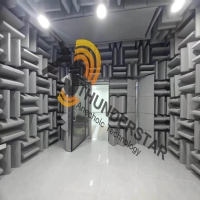
In the fields of industrial noise inspection, electromechanical product research and acoustic performance evaluation, the stability of the sound field environment directly affects the effectiveness of test results and engineering optimization. Ordinary factory buildings and conventional laboratories produce continuous sound reflection and reverberation, which mix with equipment operating noise and make it difficult to reflect the real acoustic performance of mechanical and electrical products. As one of the most widely used standard acoustic laboratories in the industrial sector, the semi-anechoic chamber adopts a five-sided sound absorption structure with a reflective floor, simulating the free sound field of an open outdoor environment. It provides a stable and standard test environment for noise detection and acoustic optimization of various industrial equipment and electronic products.
Many practitioners confuse semi-anechoic chambers, full anechoic chambers and reverberation chambers, while their application scenarios are quite different. Reverberation chambers are mainly used for sound absorption testing and sound power measurement under diffused sound fields. Full anechoic chambers adopt six-sided sound absorption and focus on fine-tuning acoustic components. The semi-anechoic chamber retains natural floor reflection, which fits the actual installation condition of industrial equipment on solid ground. It is the mainstream laboratory type for electromechanical noise testing, suitable for product batch inspection, type testing and research comparison.
Semi-anechoic chambers are widely applied in home appliances, industrial machinery, new energy equipment and ventilation systems. Air conditioners, refrigerators, range hoods, fresh air systems and other household appliances can complete noise evaluation and performance comparison in the chamber. Industrial equipment such as fans, water pumps, motors, gearboxes and air compressors can carry out operating noise testing and structural optimization analysis. It also supports acoustic verification of vehicle auxiliary equipment, energy storage cooling systems and intelligent terminals, providing effective support for product iteration and noise reduction design.
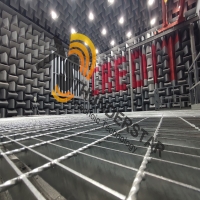
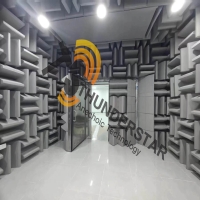
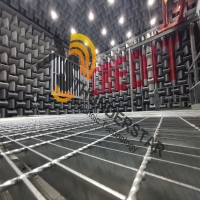
A compliant semi-anechoic chamber relies on systematic acoustic engineering design rather than simple material paving. The ceiling and surrounding walls are equipped with broadband sound absorption wedges to reduce reflected sound and maintain uniform sound field distribution. The integral suspended vibration isolation structure is flexibly separated from the main building to reduce external vibration interference. The multi-layer enclosure structure isolates external traffic noise and equipment noise to maintain low background noise indoors. Spatial proportion, equipment passage, ventilation silencing and wiring sealing are all key details that determine long-term stable testing performance.
For electromechanical manufacturers and new energy enterprises, a self-built semi-anechoic chamber improves independent R&D and quality control capabilities. Enterprises can carry out regular noise comparison tests and structural optimization evaluations according to product iteration progress, reducing dependence on external testing institutions and shortening the research and development cycle. For third-party testing organizations and scientific research institutions, standard semi-anechoic chambers serve as basic hardware for industrial noise detection and academic research, supporting various inspection projects and technical research work.
As global industrial noise control standards become increasingly standardized, empirical evaluation can no longer meet market access and project acceptance requirements. With practical sound field conditions and strong equipment compatibility, the semi-anechoic chamber provides stable support for industrial acoustic testing and product noise reduction research, promoting standardized development of the industrial acoustic industry.
ฝากคำตอบของคุณไว้
ที่อยู่อีเมลของคุณจะไม่ถูกเผยแพร่ฟิลด์ที่ต้องการจะถูกทำเครื่องหมาย *