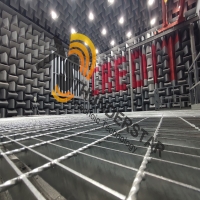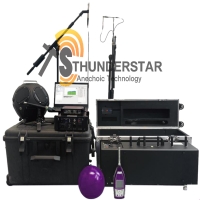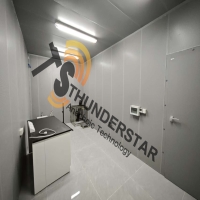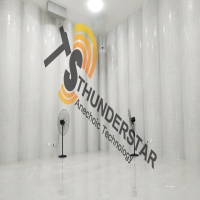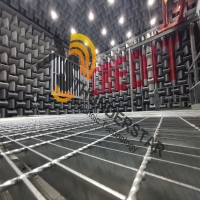






Air‑borne Sound Insulation Chamber – Constructing independent sound‑insulated space to realize air‑borne sound isolation and acoustic performance verification
Airborne sound insulation is one of the most essential indicators in building acoustics, architectural material testing and indoor acoustic environment optimization. Most environmental noise such as traffic sound, mechanical operating noise and crowd noise propagates in the form of airborne sound, penetrating walls, windows and partition structures and interfering with indoor comfort and precise acoustic testing. Ordinary rooms cannot effectively block wide-band airborne sound transmission and fail to meet professional acoustic test requirements, making professional airborne sound insulation chambers indispensable infrastructure in the acoustic industry.
Many industry practitioners confuse ordinary soundproof booths with professional airborne sound insulation chambers. Conventional soundproof rooms focus on on-site noise reduction and simple listening inspection, while airborne sound insulation chambers are professionally designed for testing airborne sound transmission loss. They are dedicated to verifying the sound insulation performance of building components such as partition panels, doors, windows, curtain walls and enclosure structures, supporting product R&D, engineering verification and third-party acoustic testing services.
Adopting a standard dual-chamber structure consisting of a source room and a receiving room, the chamber effectively reduces structure-borne sound leakage and bypass sound leakage through professional enclosure design, airtight sealing and vibration isolation treatment. It ensures that sound energy mainly transmits through the test specimen during testing, restoring the real acoustic insulation performance of materials. The overall layout is optimized according to conventional test frequency bands and specimen sizes, controlling key indicators such as airtightness, sound field uniformity and background noise to avoid external interference and ensure stable and repeatable test results.
It is widely applicable for performance testing of various building acoustic materials, including sound insulation boards, composite partitions, acoustic doors and windows, insulating glass and prefabricated enclosure components. It supports product performance comparison, structural optimization and parameter calibration. It also provides reliable test conditions for university acoustic research, third-party inspection services and construction project acoustic acceptance.
For building material manufacturers, self-built airborne sound insulation chambers support independent daily testing and iterative optimization, reducing reliance on external testing institutions and accelerating new product development. For testing institutions and research institutes, standardized insulation chambers enrich professional service capabilities and academic research conditions, promoting the standardized development of the architectural acoustics industry in Southeast Asia and global markets.
Để lại Câu Trả Lời của bạn
Địa chỉ email của bạn sẽ không được đăng. Các trường cần thiết được đánh dấu *